What if our perception of emotion is fundamentally flawed?

What if our perception of emotion is radically flawed?

Subtang is a behavioral model—a blueprint for emotional maturity designed to decode how emotion drives human behavior. Is emotion a saboteur or a guide? Subtang transforms primary emotions into connectional cues, empowering today’s teens—and tomorrow’s adults and leaders—to understand, navigate, and consciously transform their behavior.

Who I am

Isik Kavuzlu is a design director who identifies patterns in complex systems, such as human behavior. She will show you how to integrate the Subtang Model into your life. So, you can decode primary emotions to tune up your inner dialogue, self-regulate, change your perception, and establish connections.

Subtang is a behavioral design company—the architect of the environment—that transforms the spaces—both physical and digital—where human and behavioral challenges arise. Subtang tackles what we call the Autopilot Crisis: destructive, fear-based, reactive patterns that often emerge under intense stress and stem from a lack of structural understanding of emotional feedback.

Subtang doesn’t focus on why someone feels a certain way; it focuses on how behavior functions as a system. Our model moves beyond vague notions of mindfulness into high-precision emotional literacy, identifying 57 fear-based behavioral suppression patterns. Digital spaces become interactive simulators where participants can safely test Manual Mode overrides and practice new behaviors within a structured framework.
Subtang is a behavioral design company—the architect of the environment—that transforms the spaces—both physical and digital—where human and behavioral challenges arise. Subtang tackles what we call the Autopilot Crisis: destructive, fear-based, reactive patterns that often emerge under intense stress and stem from a lack of structural understanding of emotional feedback.

Subtang doesn’t focus on why someone feels a certain way; it focuses on how behavior functions as a system. Our model moves beyond vague notions of mindfulness into high-precision emotional literacy, identifying 57 fear-based behavioral suppression patterns. Digital spaces become interactive simulators where participants can safely test Manual Mode overrides and practice new behaviors within a structured framework.
Isik Kavuzlu
Founder | Instructor | Design Director

Our Behavioral Operating System is very simple
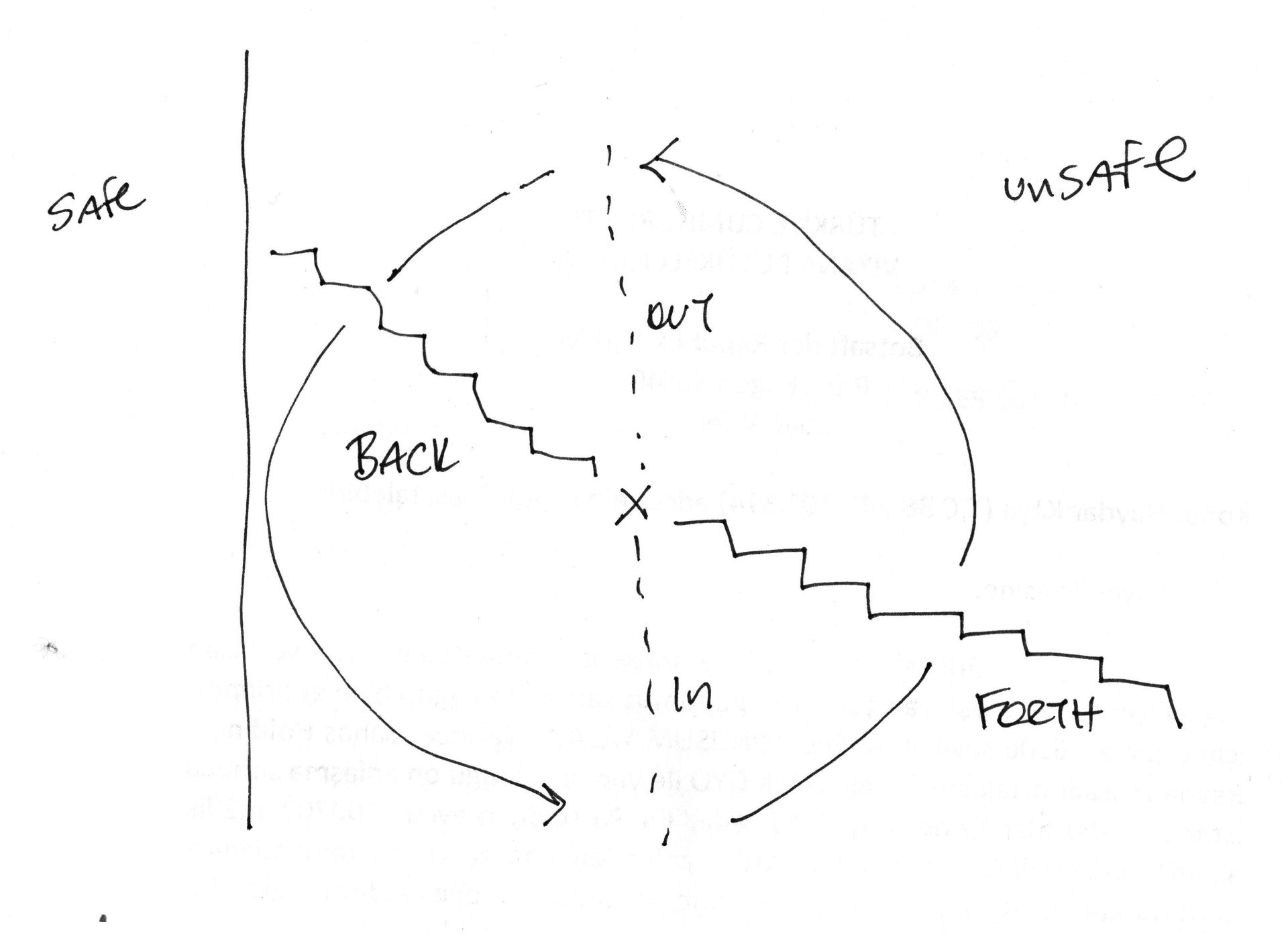
First, your system flags something you can’t handle on your own—something beyond your current capacity—and alerts you through fear, anger, sadness, and anxiety. Second, it gives you immediate feedback—a directional cue to move you into a safer position. And third, once you feel safe, your system signals joy, and you begin to solve the problem through connection with yourself, others, or your environment. That’s it. Three steps. 

Let’s walk through it—step by step.

Our Behavioral Operating System is very simple

First, your system flags something you can’t handle on your own—something beyond your current capacity—and alerts you through fear, anger, sadness, and anxiety.  Second, it gives you immediate feedback—a directional cue to move you into a safer position. And third, once you feel safe, your system signals joy, and you begin to solve the problem through connection with yourself, others, or your environment. That’s it. Three steps. 

Let’s walk through it—step by step.
Write your awesome label here.
explore Playground 

How to love and invest in emotions?

Write your awesome label here.
Photo [can, I, emotions] by Pavel Danilyuk; [love] by Bon bons studio; [invest] by Karolina Grabowska @ Pexels

Subtang model teaches you to reduce dark patterns to primary emotions. By simplifying the matter, you can see the unresolved connection problem underlying your behavior. 

Let’s grab a pen and paper

For the first two weeks, a few classes are open to everyone, so you can get a feel of Playground. Before you start, please read and agree to the disclaimer.
Playground is a space for building new routines and gently breaking out of destructive patterns. It’s a process that takes practice, patience, and your active involvement. If that feels like something you’re ready for, you can enroll.
How, my
Photo by Cottonbro studio
@ Pexels
I, learned
Photo by Google Deepmind
@ Pexels
No
Photo by
Goran Macura

@ Pexels
superior, inferior
Photo by Gratisography
@ Pexels
and
Photo by
Boys in Bristol Photography
allowed
Photo by Ryutaro Tsukata
@ Pexels
fear
Typography, illustrations, and photo manipulation by Isik Kavuzlu
Created with